
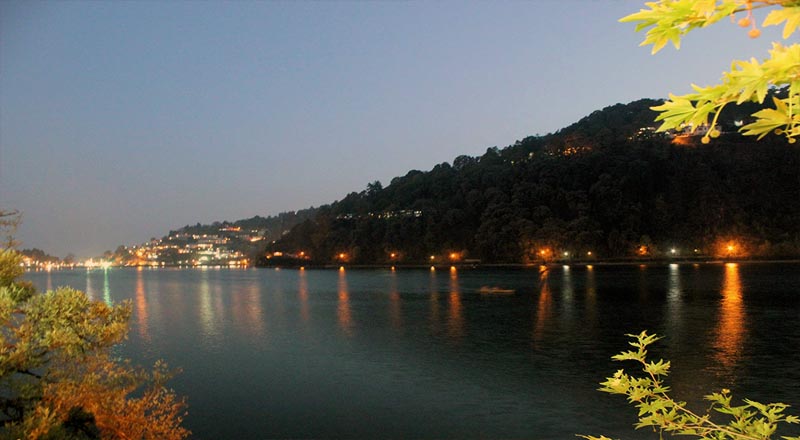
Nainital is a hill station in the Indian territory of Uttarakhand and base camp of Nainital region in the Kumaon foothills of the outside Himalayas. A rise of 2,084 meters (6,837 ft) above ocean level, Nainital is set in a valley containing a mango-shape lake, approximately two miles in limit, and encompassed by mountains, of which the most amazing are Naina (2,615 m (8,579 ft)) on the north, Deopatha (2,438 m (7,999 ft)) on the west, and Ayarpatha (2,278 m (7,474 ft)) on the south. From the most elevated purposes of the higher pinnacles, "sublime view can be seen of the colossal plain toward the south, Himalaya's focal pivot is encompassed by an incredible cold outskirt.
WHAT IS THE NAINITAL HISTORY?The Naini Lake is one of the 52 Shakti Peeths (huge altars), or religious areas where parts of the consumed Sati (Parvati) fell on earth while being conveying by Lord Shiva. The spot where Sati's eyes (or Nain) fell came to be called Nainital (Nain as Eyes) (Tal as Lake). The goddess Shakti is cherished at the Naina Devi Temple on the north shore of the present day lake. Individuals visit Nainital as reason for Hill station likewise they can have an opportunity to make them favor from Naina Devi Temple. As Temple is situated close to the lake so see is extremely decent and wonderful from that point.
The Kumaon Hills went under British government after the Anglo-Nepalese War (1814– 16), yet the slope station town of Naini Talwas built up just in 1841, with the improvement of the primary European house (Pilgrim Lodge) by P. Barron, a sugar merchant from Shahjahanpur. In his journal, he stayed in contact with "It is by a wide edge the best site I have seen over the traverse of a 1,500 miles (2,400 km) trek in the Himalayas." In 1846, when a Captain Madden of the Bengal Artillery passed by Naini Tal, he recorded that "houses were rapidly hopping up in many parts of the settlement: some towards the pinnacle of the limitary ranges were very nearly 7,500 ft (2,300 m) above sea level the extreme and woody Anyarpatta (Anyar-patt – in Kumaoni infers – complete power blackout. The reason behind this wording by the localites was in light of the fact that there were unimportant sun bars as a result of its region and thick woods) was when in doubt gradually planted and that the most adored goals were on the undulating tract of timberland arrive which expanded again from the pioneer of the lake to the base of China and Deopatta (Camel's Hump). The assembly, St. John in the Wilderness, had been built, "Soon, the town transformed into a prosperity resort favored both by British warriors and by outskirts experts and their families trying to make tracks in an opposite direction from the glow of the fields. A while later, the town furthermore transformed into the pre-summer home of the Governor of the United Provinces.
WHAT IS THE SIGHTSEEING PLACES IN NAINITAL?
Naina Devi Temple
Naina Devi sanctuary is one of the principle fascination of Nainital. This sanctuary is one of the 52 Shakti Peeths (critical sanctums) of India. People groups trust eyes of consumed Sati (Shiva's first spouse) Nain (Eyes in Sanskrit) fall here while conveying by Lord Shiva. The goddess Shakti is adored at the Naina Devi Temple on the north bank of the present day lake. Individuals visit Nainital as motivation behind Hill station likewise they can have an opportunity to make them favor from Naina Devi Temple. As Temple is situated close to the lake so see is extremely decent and lovely from that point.
St. John Church
St John in the Wilderness is one of the soonest structures raised in Nainital and perhaps the finest church in any Indian Hill station. The congregation was named by the priest of Calcutta who came to Nainital in 1844, when the place was still especially a wild. St John In The Wilderness church contains a metal dedication to the casualties of popular landslip. Assemblages of couple of casualties were covered in the memorial park here.
Governor's House
The Governor's House - Raj Bhawan area is 220 sections of land and was developed in the line of Buckingham Palace London, having twice storied 113 rooms. State guests and V.I.P. coming to Nainital too utilize it for their remain. It's comprised of a great Garden, Golf Links, and Swimming Pool and encased with verdant green piece of Deodar and Oak trees. The base stone of the Nainital Government House, structure after Buckingham Palace, was laid on April 27, 1897, and the building was done in March 1900.
Naini Peak
This is the most astounding pinnacle of the Nainital and beforehand was known as the China Peak. This pinnacle has at stature of around 2615 meters accordingly is most noteworthy in Nainital and furthermore is a place which gives a 10,000 foot vision of the whole town. The place is known for its exquisiteness and the scenes that make it more attractive. There is likewise arranged Naini Lake hence, which appears to seem littler as one ascents in stature while climbing this specific pinnacle. The Naina Peak is a place that is implied for the climbers and the general population who can't climb through can likewise enlist donkeys there.
Tiffin Top
Missing Tiffin Top from your adventure of Nainital would be regret. One can reach here through a staggering trek of 4 km through dark timberland, or one can choose for a horse ride from the horse Stand. Dorothy's seat is the last purpose of the Horse Ride. The brilliantly peaceful spot limited by pine, Oak and Deodar trees. When you achieve Tiffin top, you would be welcomed by enchanting all encompassing vision of the Kumaun slopes and obviously the Naini Lake.
Pt. G.B. Pant High Altitude Zoo
Opened in 1994, it is one of the two High altitudes Zoo in India, Second is in Darjeeling, West Bengal. It houses various Phesants e.g. Kaleej Phesant etc.; high altitude endangered Mammals like Siberian Tiger, Snow Leopard, Goat Antelope-Ghooral and Serao etc. The animals are according to their habitat altitude, e.g. Snow Leopard is kept on the highest point of Nainital Zoo.
Gurney House
Gurney House is a notable building situated in Nainital, Uttarakhand, India, and was the habitation of seeker traditionalist and essayist Jim Corbett. It is situated close to Nainital Lake, and was worked in 1881. Miss Margaret Winifred Corbett, Jim Corbett's sister, sold the house to Mr. Sharda Prasad Varma in the year 1947 when they exited for Kenya. As of now the house is claimed by his granddaughter, Nilanjana Dalmia. The bungalow was built in 1880 with the destroyed material of their before house on Alma Hill (which was on the slope on which an avalanche happened). Furthermore, consequently the name suggesting a house worked of trucked material of a destroyed house.
Eco Cave Gardens
Eco Cave Garden of Nainital is a gathering of interconnected stony gives in and hanging gardens that leads the traveler into an abnormal and long time past dream. Including six hollows and a melodic wellspring, Eco Cave Garden is popular among voyagers of the considerable number of ages specially kids as they are acquainted with an eco-accommodating life inferable from a fantastic approach, which gets kids inspired by nature and certification that they motivate delight to investigating things.

Copyright 2026 Rock Park Group of Hotel & Tour Planner
